

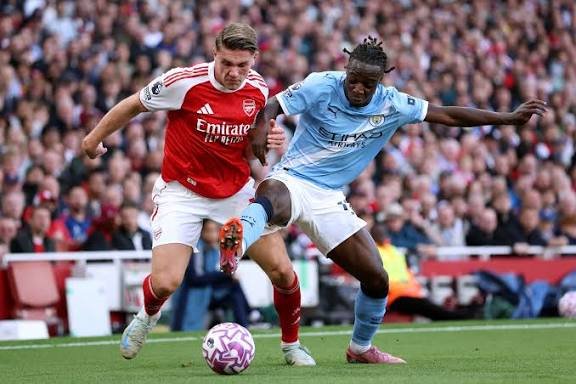
Evaluating newly promoted teams entering the Premier League presents a distinct analytical challenge, as historical data from the Championship rarely translates linearly to top-flight football. The 2010/11 Premier League season serves as one of the most compelling case studies for this dynamic, featuring three promoted sides with vastly different tactical philosophies, financial backings, and squad structures: Newcastle United, West Bromwich Albion, and Blackpool. Understanding whether to support these teams in the betting market or back against them requires examining how structural tactical mismatches, market pricing delays, and squad depth interact across a demanding 38-game campaign.
The Structural Realities of Transitioning to Top-Flight Football
The jump from the Championship to the Premier League introduces a massive leap in technical execution, positional discipline, and opposition conversion rates. Promoted teams face an immediate shift from being dominance-based sides that dictate possession to reactive units that must optimize limited scoring opportunities. During the 2010/11 campaign, this dynamic created sharp variance between expectations and reality, particularly because the three incoming clubs refused to adopt uniform survival strategies. Analyzing these transitions requires looking past romantic narratives of momentum and focusing entirely on how defensive organization absorbs top-tier pressing. When market oddsmakers set early-season lines, they frequently rely on historical power ratings that underprice the physical and tactical friction newly promoted sides face during their opening fixtures.
Newcastle United and the Fallacy of the Traditional Promoted Club
Newcastle United entered the 2010/11 season as a promoted side in technicality alone, having retained a nucleus of established international talent following their unexpected relegation a year prior. Unlike typical Championship graduates operating on restricted budgets, Newcastle possessed top-tier physical profile, elite set-piece delivery, and proven goalscoring threat in Andy Carroll. Market pricing early in the season consistently treated Newcastle as a standard lower-tier survival candidate, creating massive pricing inefficiencies in fixtures against mid-table mainstays. Backing Newcastle during the first half of that campaign yielded high returns because oddsmakers lagged in readjusting their baseline power rankings to match the actual quality of Newcastle’s core squad.
The Impact of January Roster Disruptions on Market Value
Mid-season structural changes often destroy the underlying logic of early-season betting trends, rendering historical performance data instantly obsolete.
- Key Asset Sales: The deadline-day transfer of Andy Carroll to Liverpool fundamentally altered Newcastle’s offensive output, removing their primary aerial pivot and set-piece target.
- Tactical Forced Adjustments: Newcastle was compelled to transition from a direct, high-cross system to a ground-based counter-attacking style without having the requisite midfield playmakers.
- Market Readjustment Lag: Oddsmakers took several matchweeks to recalibrate Newcastle’s goal projections downward, creating short-term value opportunities in fading their team total overs.
Analyzing how roster turnover impacts structural playing style demonstrates why simple win-loss records fail to capture true underlying value during a volatile league campaign.
Blackpool FC and the Double-Edged Sword of Uncompromising Attack
Ian Holloway’s Blackpool side presented one of the most extreme tactical profiles in modern Premier League history, prioritizing high-risk offensive transitions regardless of opposition quality. In the opening months of the 2010/11 season, this reckless enthusiasm overwhelmed defensive structures unaccustomed to such aggressive pressing from a newly promoted team. Blackpool repeatedly hit high-odds match-winner lines and inflated goal totals, making them a favorite among casual observers. However, their total lack of defensive stability meant that once elite managers analyzed their build-up patterns, opposition teams easily exploited the vast space left behind Blackpool’s adventurous wing-backs.
West Bromwich Albion and the Pragmatism of Tactical Adaptability
West Bromwich Albion represented the middle ground between Newcastle’s raw squad quality and Blackpool’s tactical extremism. Managed initially by Roberto Di Matteo and later stabilized by Roy Hodgson, West Brom adjusted their system based on venue and opponent quality rather than adhering blindly to a single identity. This adaptability made them a difficult team to price accurately, as their performance metrics varied wildly depending on whether they were expected to control possession or absorb pressure. Hodgson’s arrival mid-season instilled rigid zone-based defensive mechanics, drastically reducing their goals-against average and turning them into a reliable side to cover Asian Handicap spreads during the run-in.
Evaluating Market Perception Versus Statistical Realities
Bettors who evaluate promoted teams purely on intuition often fall victim to recency bias, overreacting to early flukes while ignoring underlying expected goals and defensive concessions.
| Club | Strategic Identity | Defensive Stability | Squad Depth Rating | Ideal Market Angle |
| Newcastle United | Direct / Physical | Moderate-High | High | Backing as Away Underdogs |
| Blackpool FC | High-Risk Attacking | Very Low | Extremely Low | Target Over on Total Goals |
| West Bromwich Albion | Flexible / Positional | Low Early / High Late | Moderate | Asian Handicap Cover Late Season |
Evaluating these distinct profiles highlights how blanket strategies—such as systematically backing or fading all promoted teams—ignore the profound tactical differences that dictate actual match outcomes.
The data reveals that promoted teams cannot be treated as a single cohesive unit within sports markets. While Blackpool offered incredible early-season value on total goal markets before suffering from exhaustion and tactical exposure, Newcastle’s success was driven by structural squad quality that the market initially underrated. West Brom demonstrated how managerial intervention can shift a team’s betting profile mid-stream from high-variance to high-discipline. Understanding these nuances allows analysts to pinpoint specific fixtures where public perception diverges from tactical reality, rather than relying on generalized assumptions about Championship teams entering the top tier.
When Fading Promoted Sides Becomes a High-Probability Strategy
Fading newly promoted teams becomes mathematically advantageous when fatigue accumulates during the dense winter schedule between December and February. Championship clubs operate with thinner rosters, meaning key starters play significantly more minutes at higher intensity levels than they previously experienced. When injuries inevitably strip away core starter quality, the drop-off in replacement talent on the bench is far steeper for promoted sides than for established Premier League clubs. Oddsmakers often fail to fully adjust handicap spreads for mid-week fixture congestion, underestimating how severe physical degradation impacts a promoted team’s ability to maintain high-pressing defensive structures over 90 minutes.
Analyzing these physical metrics requires evaluating the infrastructure supporting long-term performance tracking. Assessing how specialized operators establish their analytical parameters yields clarity on market shifts; considering an established service such as ufa168 provides context on how modern Asian Handicap lines adjust dynamically to squad rotation and mid-week injury updates.
Tracking line movements across major bookmakers reveals how institutional money responds to physical drop-offs long before the general public notices player fatigue. When a promoted team loses its primary central defender or defensive midfielder, their capacity to defend set pieces drops exponentially, creating predictable value in opponent team totals. Fading promoted teams during these specific positional crises consistently yields higher returns than blind opposition based on club prestige alone.
Circumstances That Favor Backing Promoted Outliers
Promoted teams offer maximum market value during the initial six to eight weeks of the regular season, a period defined by opponent unfamiliarity and high adrenaline. Established Premier League sides frequently approach early-season fixtures against promoted clubs with an implicit complacency, leaving themselves vulnerable to fast-start intensity. Furthermore, home fixtures for newly promoted teams during this opening window carry elevated crowds and intense atmospheres that skew home-field advantage metrics beyond standard baseline calculations. Identifying these specific psychological and atmospheric alignment windows allows sharp analysts to capture inflated moneyline odds before the market recalibrates.
Evaluating the variance across digital markets reveals how bookmakers balance exposure against sharp capital movements. Examining line movement dynamics through a digital destination like casino online highlights the speed with which international markets smooth out early-season pricing errors once performance metrics normalize.
Recognizing these operational realities helps isolate short-term valuation gaps from long-term structural trends. When a promoted team combines a passionate home environment with a fully fit starting eleven, their short-term output often matches mid-table Premier League standards. Exploiting these short windows before fatigue and tactical adjustments set in is the primary mechanism for generating positive expectancy when backing Championship graduates.
Strategic Frameworks for Evaluating Future Championship Graduates
To consistently identify value when analyzing newly promoted Premier League teams, analysts must move past narrative-driven commentary and construct a rigorous, criteria-based evaluation framework. Applied analysis requires separating temporary emotional momentum from sustainable tactical infrastructure.
- Assess Premier League-Ready Physical Metrics: Determine if the promoted side possesses elite recovery pace in central defense and physical ball-winners in midfield capable of absorbing sustained top-flight pressure.
- Evaluate Squad Depth Beyond the Starting Eleven: Quantify the drop in quality between primary starters and secondary bench options to predict performance degradation during winter fixture congestion.
- Track Tactical Adaptability Under Stress: Identify whether the manager possesses alternative tactical systems for away fixtures against elite top-four opposition, or if they rely exclusively on a single high-risk playstyle.
- Monitor Early-Season Market Line Movement: Compare opening Asian Handicap lines against closing lines across the first six matchweeks to determine whether institutional capital is buying or selling the team’s underlying metrics.
Applying these systematic checks prevents emotional bias and isolates the precise conditions where market pricing diverges from actual pitch dynamics.
Executing this framework demands rigorous discipline and an absolute refusal to apply blanket rules to diverse footballing institutions. The 2010/11 season clearly demonstrated that treating Newcastle, West Brom, and Blackpool as identical entities would have led to catastrophic analytical failures. Each club required a completely distinct betting approach based on their structural realities, squad depth, and tactical adaptability.
Summary
Deciding whether to back or fade newly promoted Premier League teams requires a granular evaluation of tactical systems, squad depth, and market pricing speed rather than generalized assumptions. The 2010/11 season highlighted that promoted teams fall into distinct categories: structural powerhouses with hidden quality like Newcastle, high-risk tactical idealists like Blackpool, and pragmatists like West Brom. Early-season opportunities favor backing promoted teams due to public market lag and high physical intensity, whereas mid-to-late season dynamics heavily favor fading them as fatigue, injuries, and tactical familiarity expose squad limitations. Long-term profitability relies on isolating specific tactical mismatches and roster disruptions rather than applying a universal rule to Championship graduates.
